
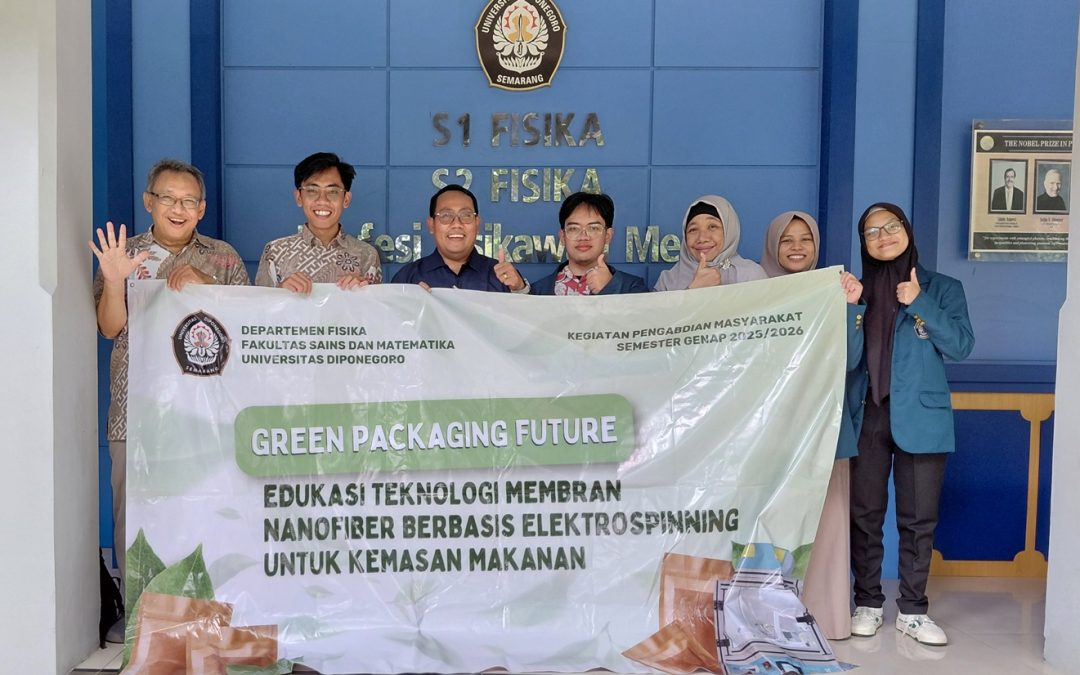
Semarang, April 28, 2026 — A community service team from the Department of Physics, Faculty of Science and Mathematics, Universitas Diponegoro, held an educational outreach program entitled “Green Packaging Future: Education on Electrospun Nanofiber Membrane Technology for Food Packaging” at SMAIT Harapan Bunda Semarang on Tuesday, April 28, 2026.
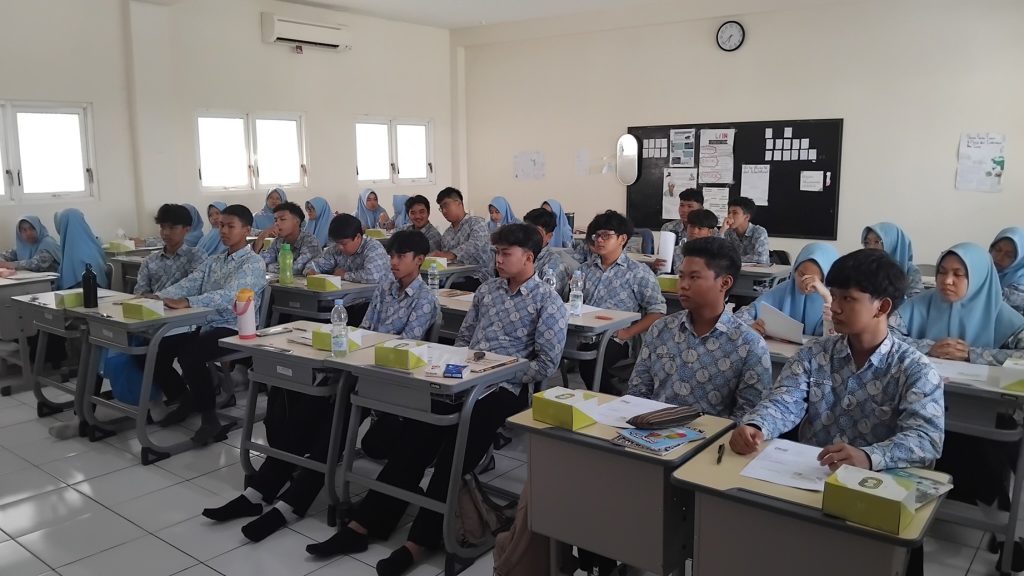
The program was attended by approximately 40 students, who showed strong enthusiasm throughout the presentation and discussion sessions. The students actively raised questions about food packaging technology, environmentally friendly materials, nanotechnology, and the potential application of nanofiber membranes in daily life.
The community service team consisted of UNDIP Physics lecturers, namely Dr. Ngurah Ayu Ketut Umiati, S.Si., M.Si.; Drs. Indras Marhaendrajaya, M.Si.; Prof. Dr. Heri Sutanto, S.Si., M.Si., F.Med.; and Oki Ade Putra, M.Si., along with four Physics students from the Faculty of Science and Mathematics, Universitas Diponegoro.
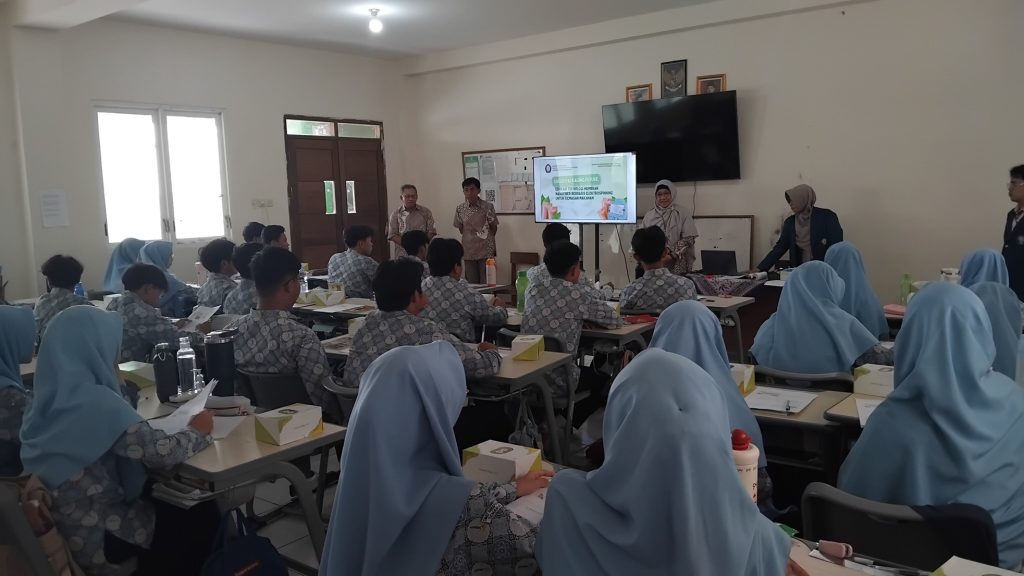
During the activity, students were introduced to key issues related to conventional food packaging, which still faces several limitations, including limited protective function, environmental concerns, and the growing need for more adaptive and sustainable materials. Through an educational approach, the UNDIP Physics team explained that advances in materials science and nanotechnology are opening new opportunities for transforming food packaging into smart packaging. This type of packaging is not only designed to protect food products but can also be developed to provide additional functions, such as maintaining product quality, extending shelf life, and responding to changes in the storage environment.
One of the technologies introduced in the program was electrospinning, a fabrication method used to produce ultrafine fibers down to the nanoscale. This technology enables the production of nanofiber membranes with a high surface area, porous structure, and tunable material properties, making them promising for future food packaging applications.
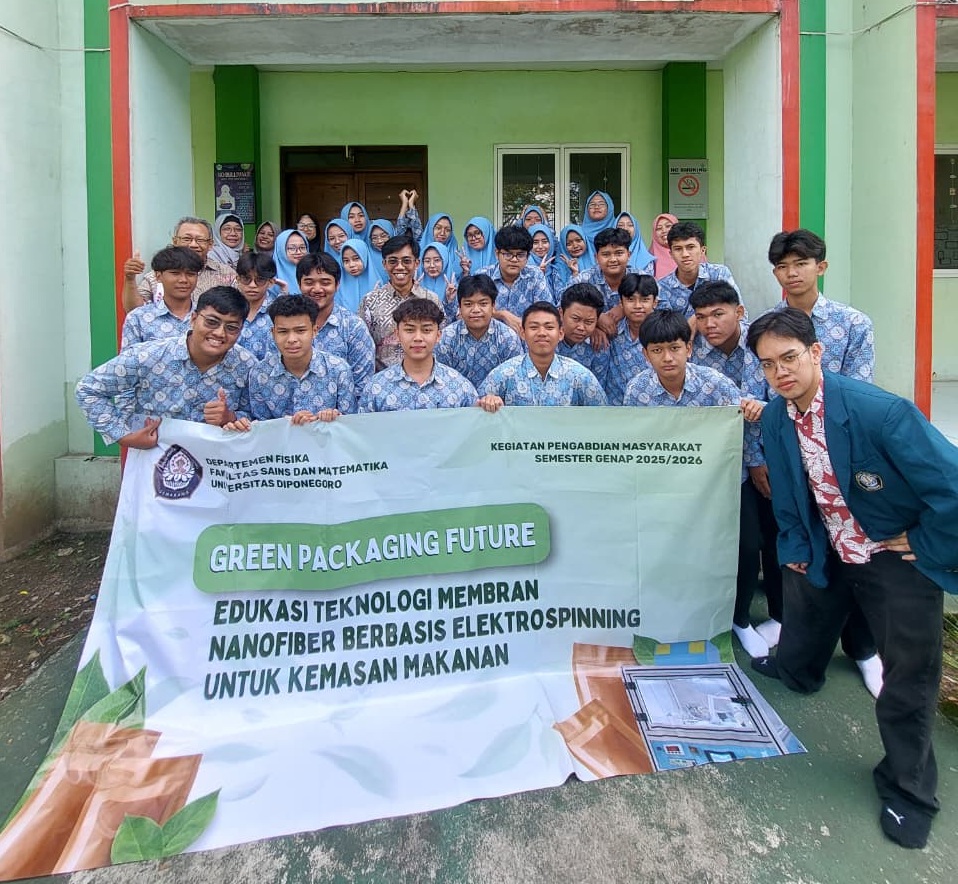
The head of the community service team, Dr. Ngurah Ayu Ketut Umiati, S.Si., M.Si., stated that the activity was expected to broaden students’ understanding of the role of physics in developing material technologies that are closely related to everyday life.
“We hope this community service activity can continue, including through a student visit to the Department of Physics at UNDIP, where they can directly observe and practice using the electrospinning equipment,” said Dr. Ngurah Ayu Ketut Umiati.
This activity also reflects the commitment of the Department of Physics, UNDIP, to introducing advanced research and technology to younger generations. Through community service programs such as this, students are expected not only to gain theoretical knowledge but also to understand how physics can contribute to solving real-world challenges, particularly in the fields of materials, food, environment, and sustainable technology.
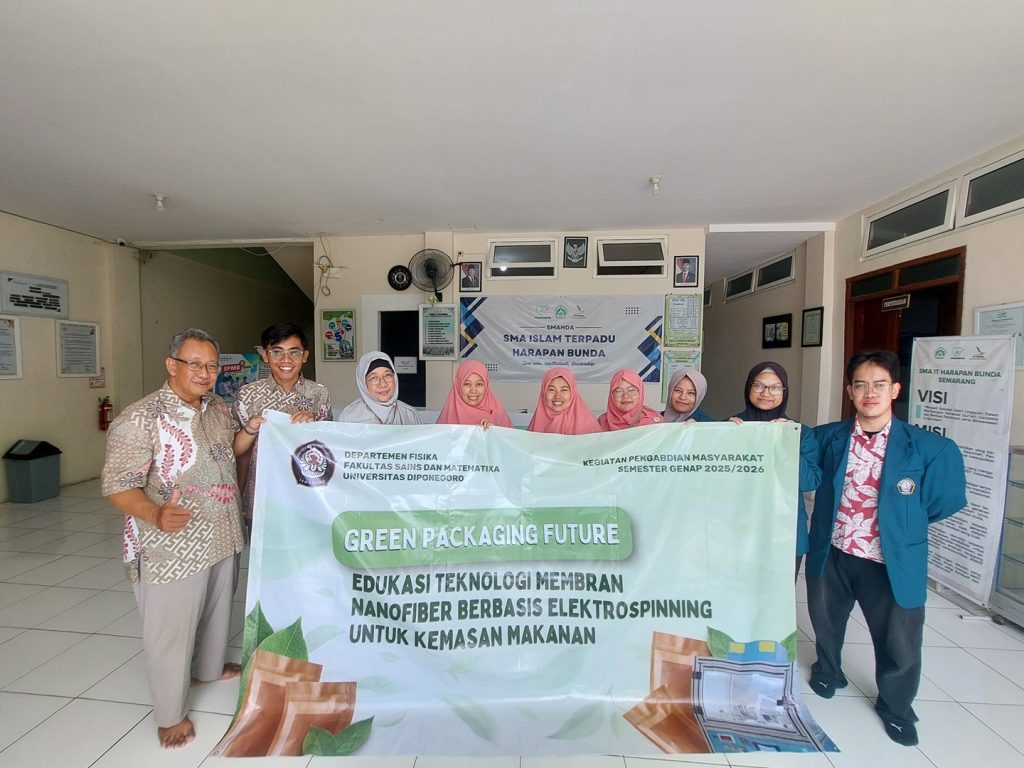
Through education on green packaging and nanofiber membrane technology, the program is expected to encourage students to explore science more deeply, develop curiosity, and recognize physics as an applicative, innovative, and future-oriented field.