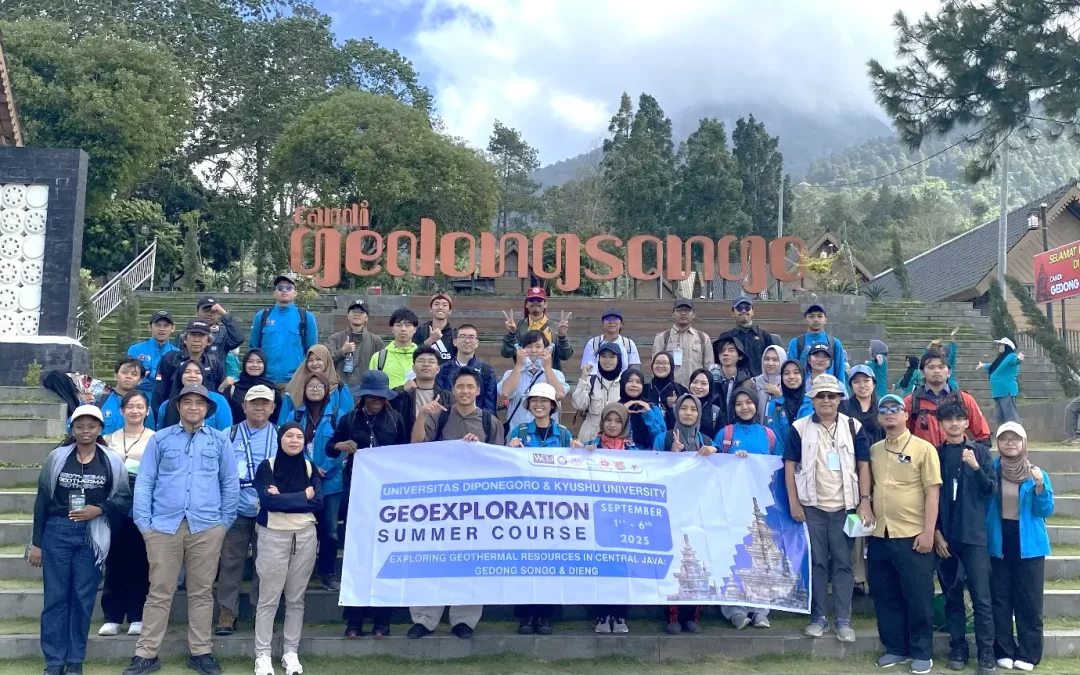
Semarang – The Geophysics Laboratory of the Physics Department, Faculty of Science and Mathematics (FSM), Diponegoro University, in collaboration with Kyushu University and supported by BMKG and BRIN, officially launched the Summer Course Geoexploration 2025. This event is part of FSM UNDIP’s World Class University (WCU) program, aimed at strengthening international academic networks and research collaboration in the renewable energy sector.
Themed “Exploring Geothermal Resources in Central Java: Gedong Songo Field Study,” the program took place from September 1–5, 2025, in a hybrid format (online and offline), held at UNDIP Semarang and the Gedong Songo Geothermal Field on Mount Ungaran.
The program successfully attracted 278 participants from various countries, with 31 attending in person (20 Indonesian and 11 Japanese students) and 247 joining virtually from nations including Indonesia, Japan, France, Nigeria, Nepal, South Africa, Pakistan, Ethiopia, Germany, Afghanistan, Cameroon, and India. This high level of international participation underscores the strategic role of the event as a global platform for knowledge exchange and collaboration in geothermal exploration.
The activities commenced with an official opening at UNDIP, attended by university leaders and international partners, including representatives from Kyushu University and Prof. Dr. Ir. Hadiyanto, Director of Global Reputation, Partnerships, and Connectivity at UNDIP. In their remarks, the leaders emphasized the importance of renewable energy development and the role of the younger generation in driving innovation within the geothermal sector.
The first day consisted of a series of lectures providing the theoretical foundation for geothermal exploration. The curriculum covered a geological overview of Mount Ungaran, as well as gravity, geomagnetic, geological, geochemical, and passive seismic methods. The speakers included academics from UNDIP and Kyushu University, as well as researchers from BRIN, offering a comprehensive perspective across various geosciences disciplines.
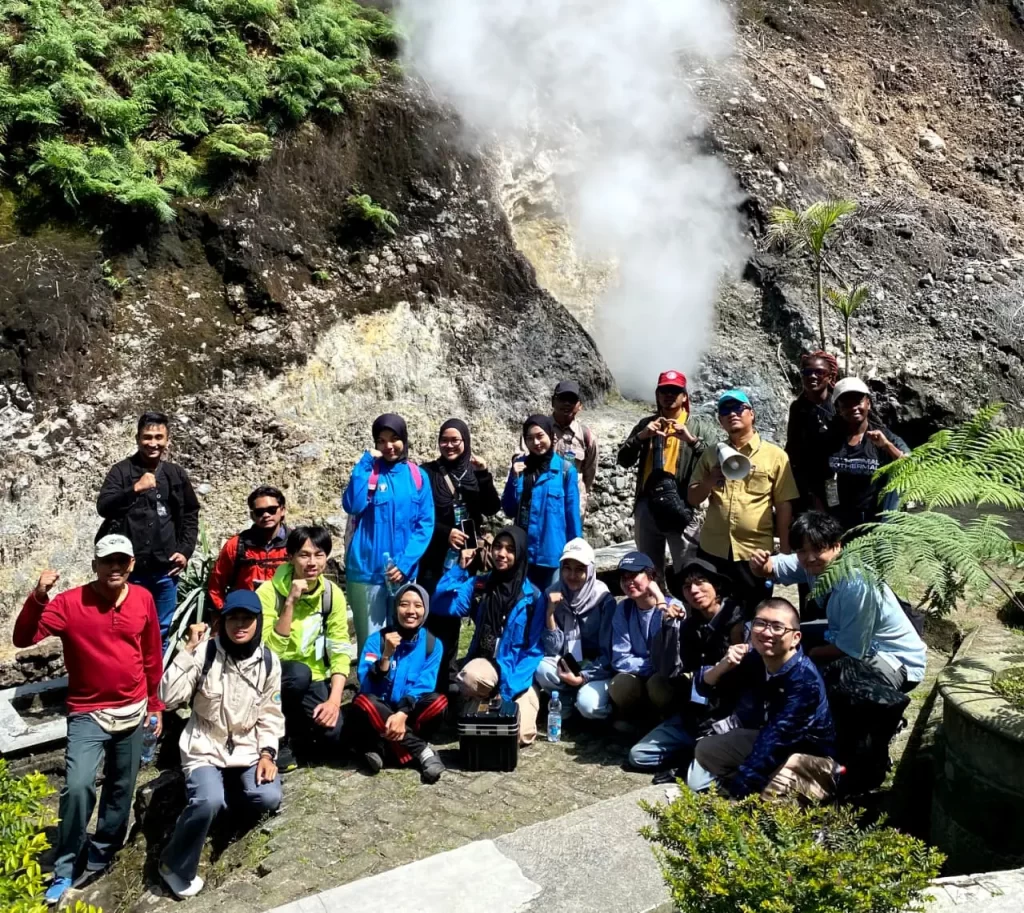
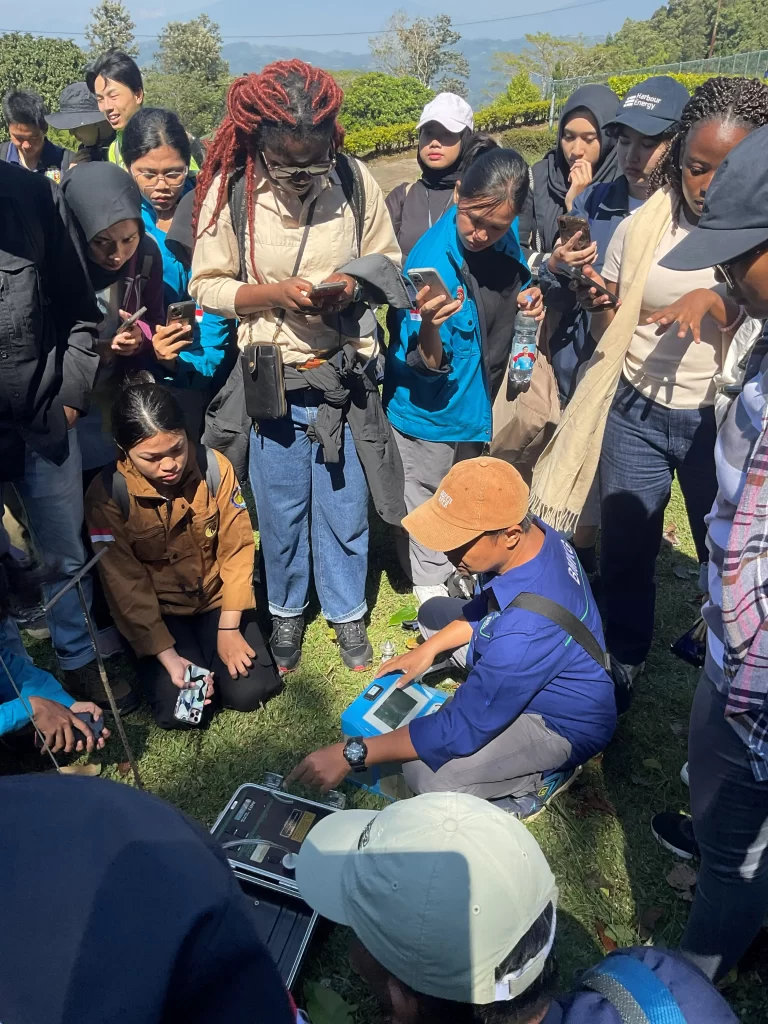
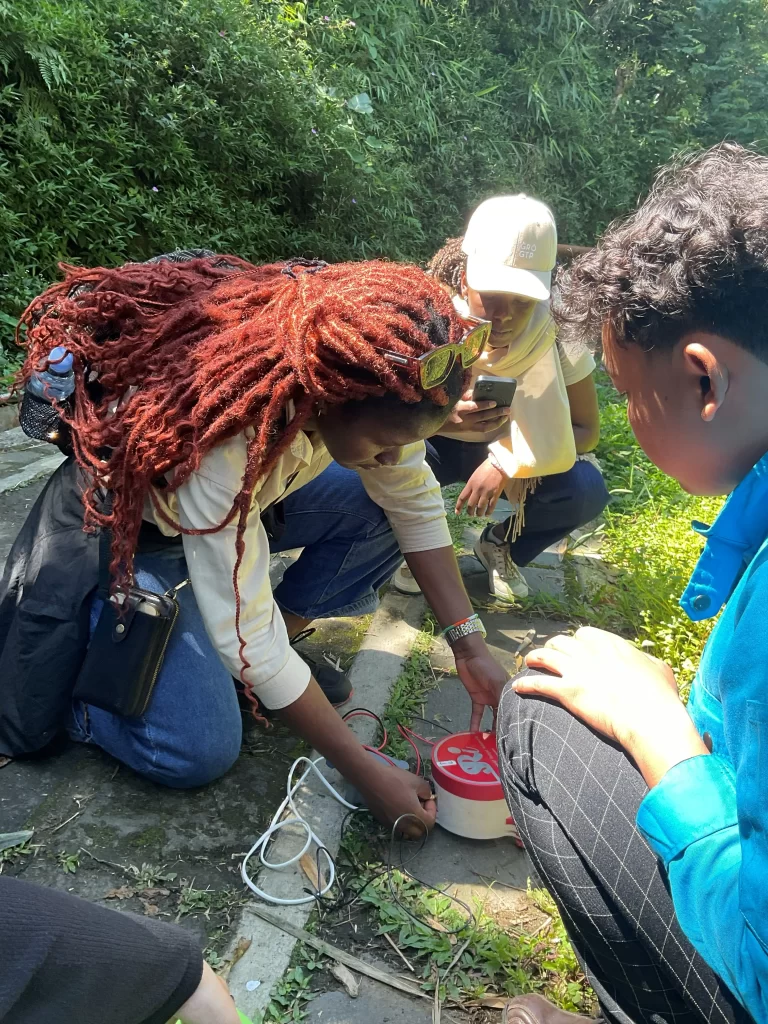
On the second and third days, the program transitioned to field studies at the Gedong Songo Geothermal Area, a site renowned for its geothermal manifestations such as fumaroles, hot springs, and hydrothermal alteration zones. Participants conducted geological, geochemical, geomagnetic, and gravity data acquisition, as well as passive seismic surveys using industrial-grade equipment, including the Seismograf Rakyat Indonesia (SRI) provided by PT Protech Engineering.
This field experience provided participants with the opportunity to directly understand the geothermal exploration process, from data collection to managing operational challenges in complex terrain. Furthermore, the interaction among international participants strengthened the aspect of cross-cultural collaboration.
On the fourth day, participants moved to the laboratory for data processing, which included passive seismic analysis (HVSR and tomography), gravity correction and modeling, and geomagnetic data processing through to the interpretation stage. This phase emphasized the integration of geophysical methods to understand subsurface structures and potential geothermal reservoirs.
The program concluded with final presentations from each group. Participants presented their analysis and interpretations, including preliminary subsurface models indicating geothermal reservoir potential in the Ungaran region. A reflection session revealed that the event provided not only academic enrichment but also strengthened international networks and a spirit of collaboration. Through Summer Course Geoexploration 2025, UNDIP reaffirms its commitment to supporting the development of renewable energy education and research on a global scale.