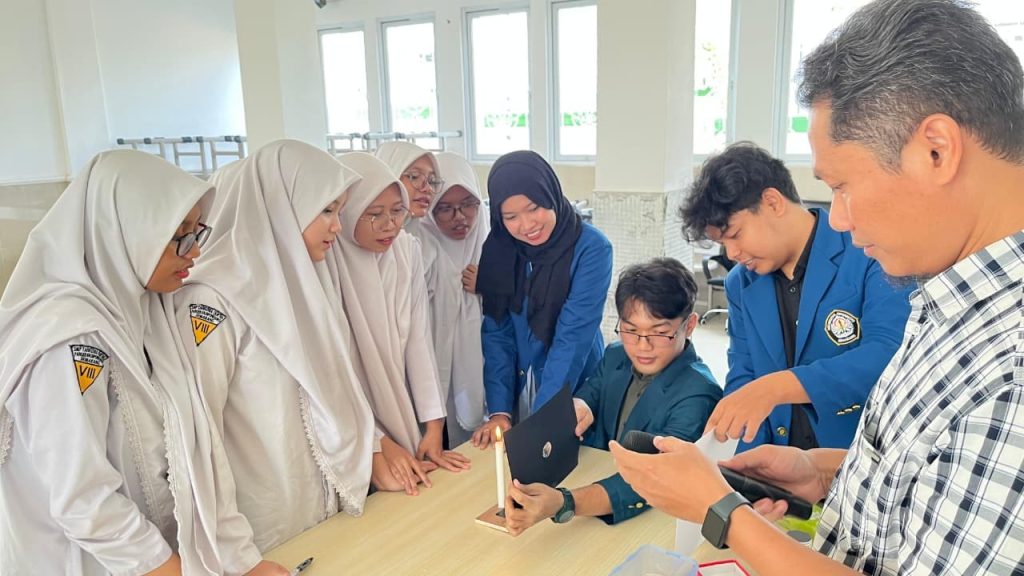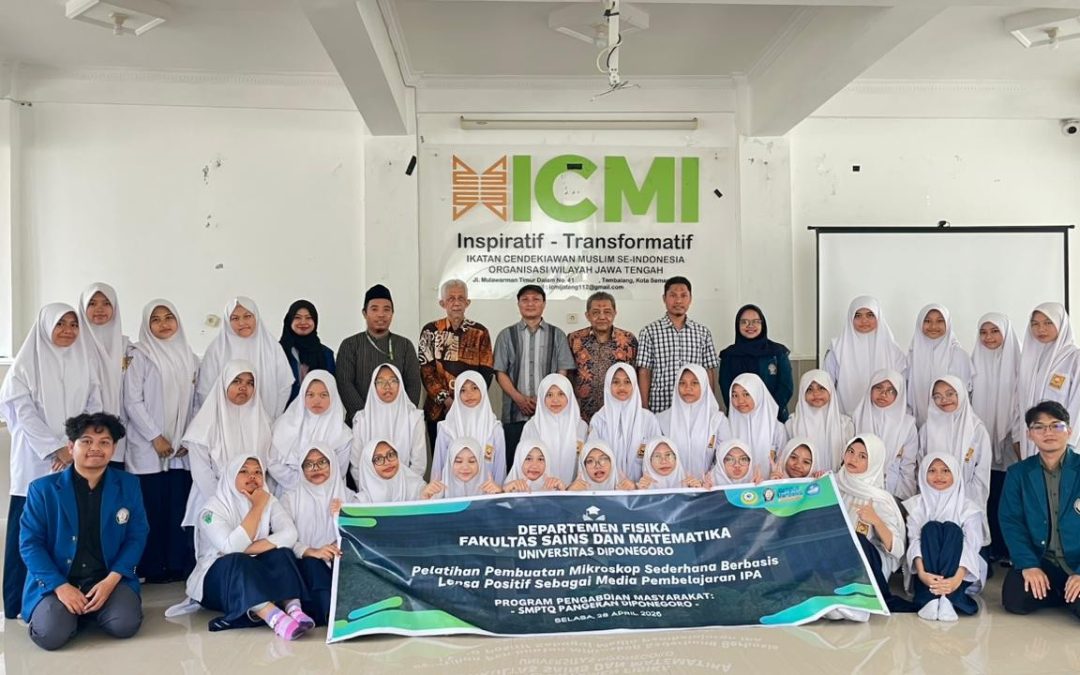
Semarang – The Physics Department of the Faculty of Science and Mathematics (FSM) at Diponegoro University has once again demonstrated its commitment to the “Tri Dharma” of Higher Education through a community service initiative. This year, the outreach team organized a workshop titled “Training on Creating Simple Microscopes Based on Positive Lenses as a Science Learning Medium,” held at SMP Tahfidzul Qur’an Pangeran Diponegoro, Semarang.
The program aims to spark students’ interest and deepen their understanding of science, specifically in the fields of physics and optics, through a practical and applied approach. This community service project is part of the university’s broader role in contributing to society through science-based education and empowerment.
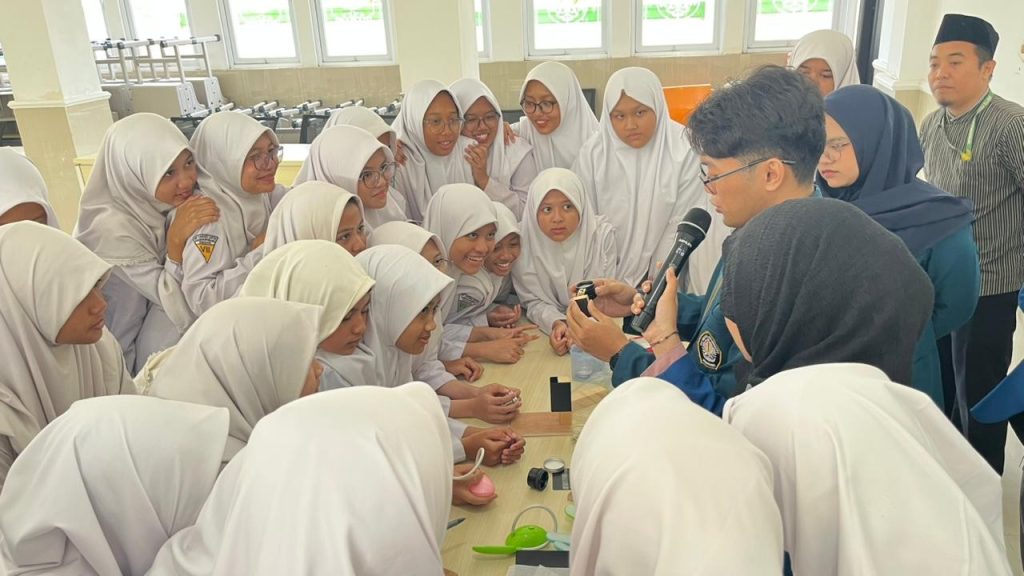
During the event, a team of lecturers—consisting of Dr. Eng. Ali Khumaeni, M.Eng., Prof. Dr. Wahyu Setia Budi, M.S., Drs. K. Sofjan Firdausi, M.Sc., and Dr. Asep Yoyo Wardaya—alongside several students, introduced the fundamental concepts of microscopy, including the principles of magnification using positive lenses. Students were then guided through a hands-on session to build simple microscopes using accessible materials such as lenses, wooden boards, and metal rulers. This live demonstration provided a tangible experience that reinforced the students’ theoretical knowledge.
The participants showed immense enthusiasm throughout the demonstration and practice sessions. Rather than just following instructions, students actively explored their surroundings using their handmade microscopes, observing the structures of leaves, flowers, and small insects.
Furthermore, this activity served as a platform to introduce middle school students to the world of higher education in science, particularly physics, at an early age. This initiative aligns with FSM UNDIP’s various outreach programs previously held in schools to provide direct benefits while promoting scientific fields to the younger generation.
Through this program, the UNDIP Physics Department hopes to cultivate curiosity, creativity, and a passion for science in students. Moving forward, similar activities with other innovative themes are planned to expand the impact of the university’s community service efforts.